
Passé Composé with Être: Which Verbs Use Être and How Agreement Works
Learn the passé composé with être: which verbs take être, how the past participle agrees, negation, examples, common mistakes and a quiz.
SLE French levels explained: what A, B, C, E and X mean, how profiles like CBC work, test scores, timing and how long results stay valid.
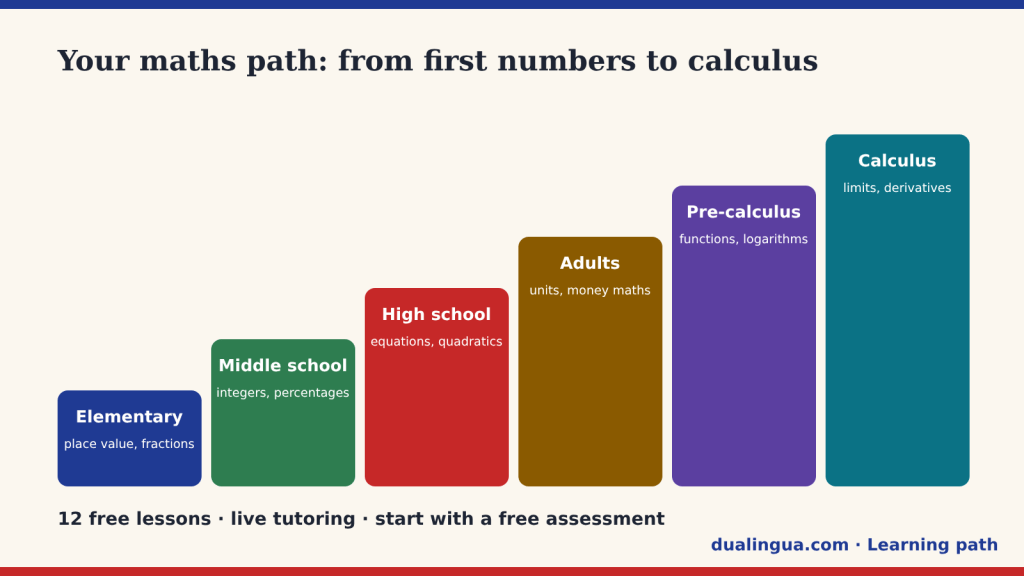
Elementary, middle school, high school, adults, pre-calculus or calculus: find your level, start with a free lesson, then take the next step with a Dualingua teacher.
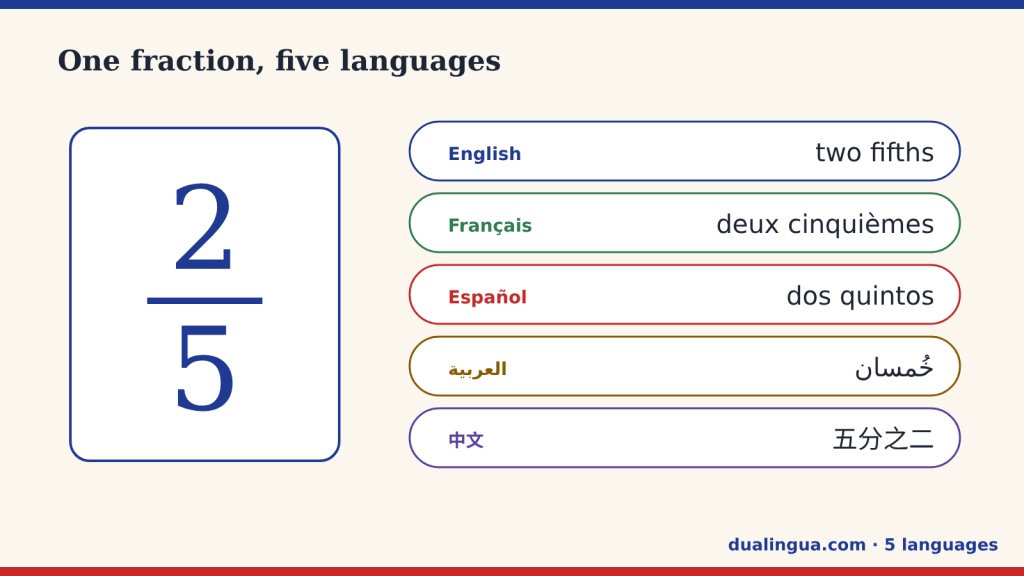
Sometimes the problem is not the maths, it is the language of the maths. How Dualingua helps newcomer students, French immersion learners and parents follow maths in a language they understand.
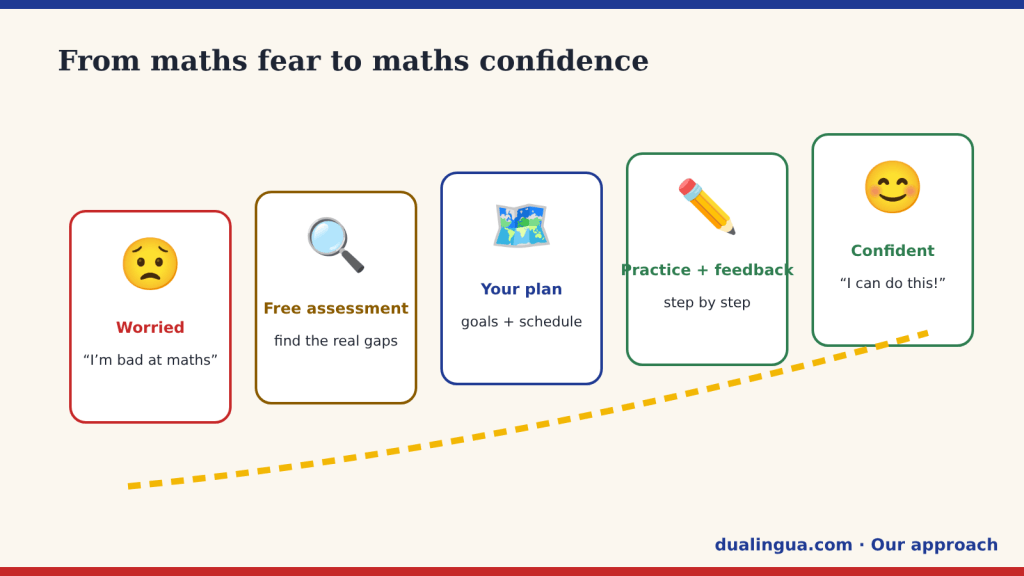
Confidence in maths is built step by step. Discover the five stages of the Dualingua approach, from the free assessment to regular progress reports, and why each step matters.
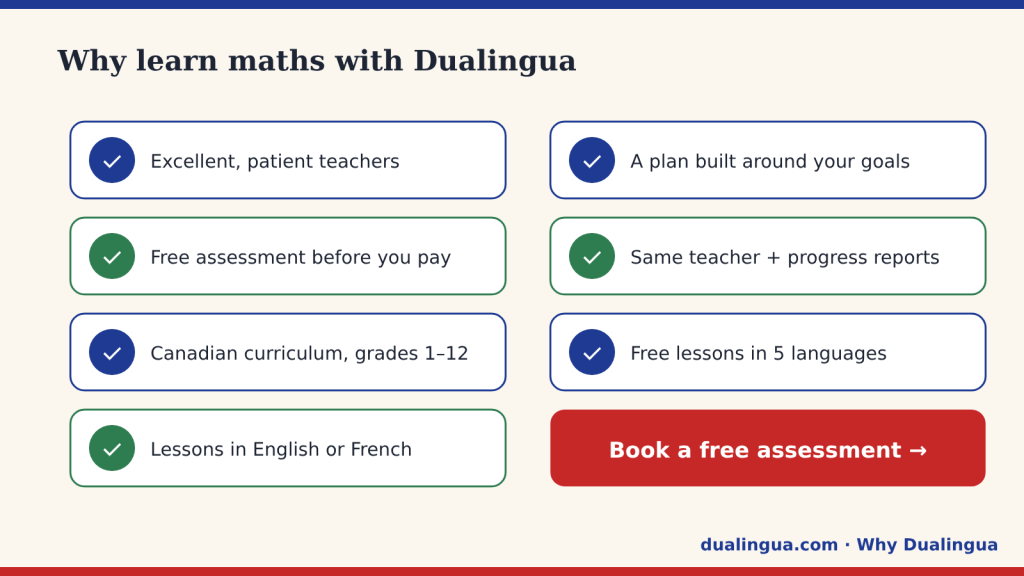
Struggling with maths is common. Staying stuck is not necessary. Here are seven reasons Dualingua is a great place for children, teens and adults to overcome maths challenges and grow.
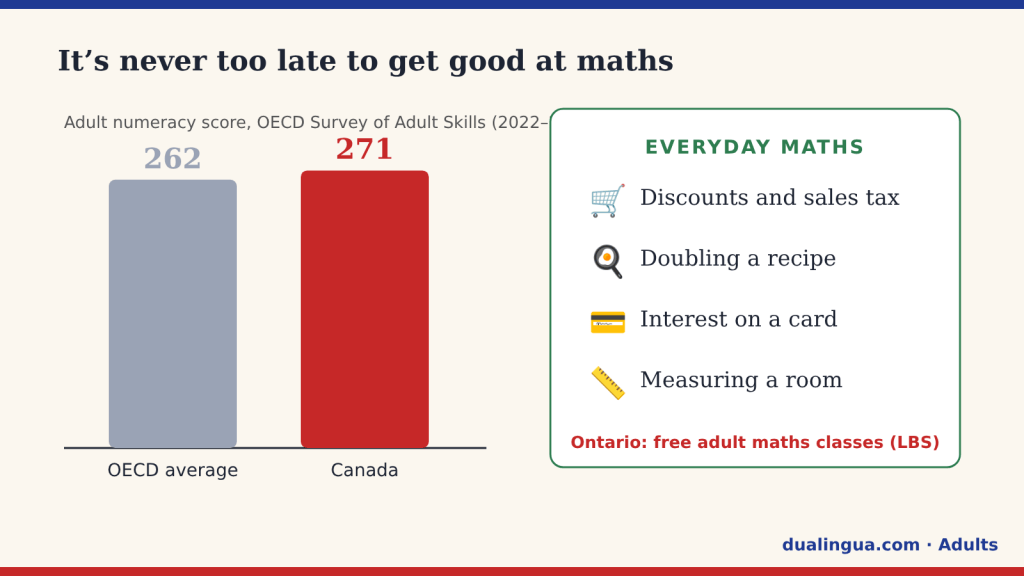
Discounts, recipes, loans, measuring a room: maths is everywhere in adult life. If school maths left bad memories, here is why it’s never too late, and how to start again gently.
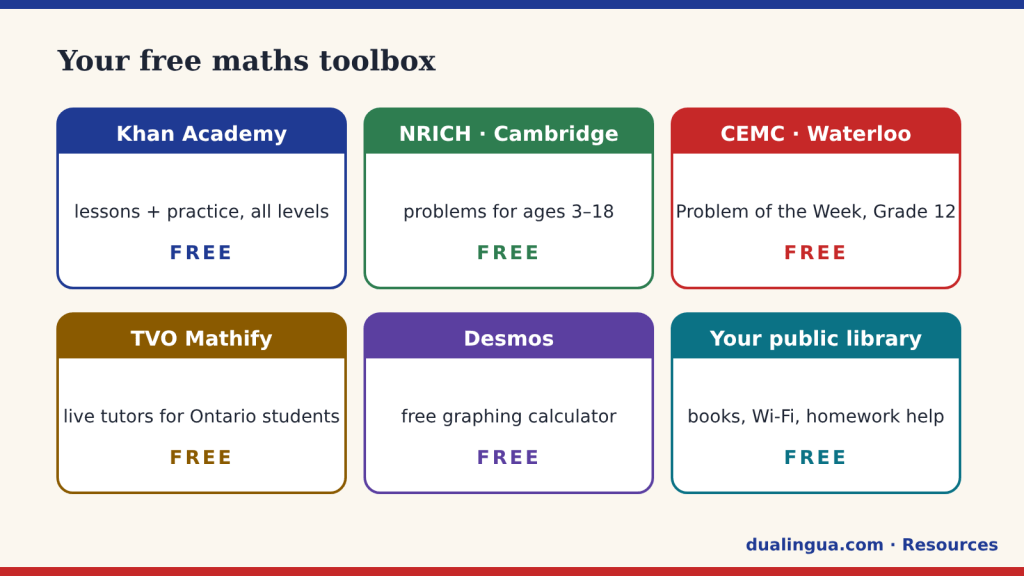
You do not need to pay to get good maths help. Here is our list of the best free, trustworthy maths resources for children, teenagers, parents and adults, many from top universities.
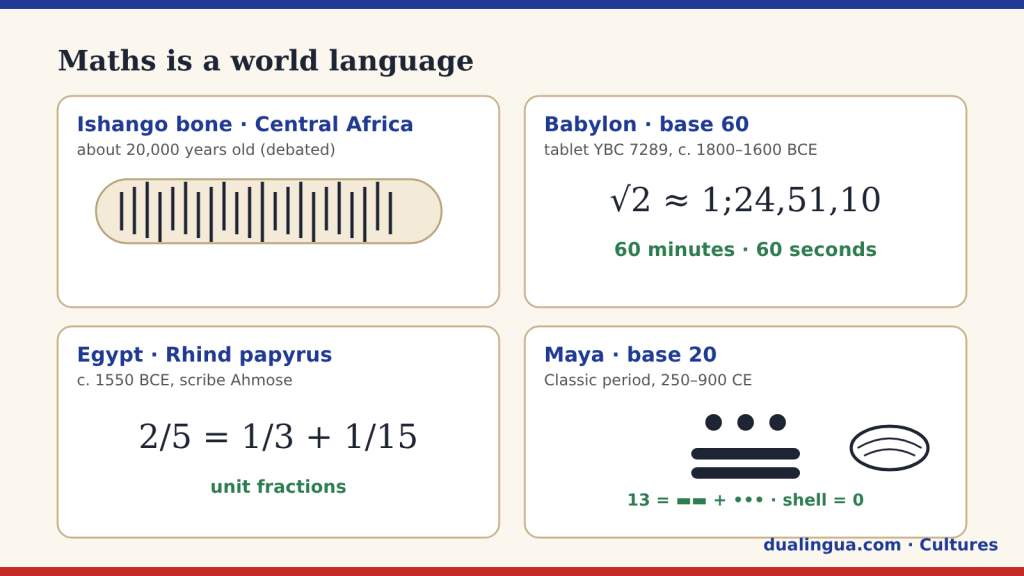
Why does an hour have 60 minutes? Who used a shell for zero? A quick trip around the world to discover how different cultures invented maths, with challenges to try.
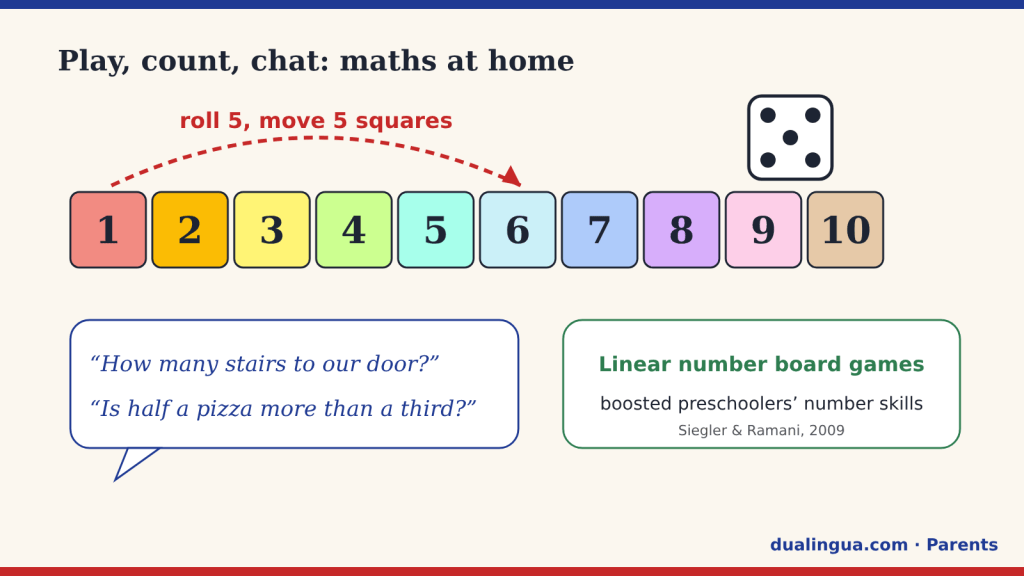
You do not need to be a maths expert to raise a child who loves maths. Board games, number talk and a calm attitude make a real difference. Six fun ideas for parents.